
How to Clean Baseboard Heaters (Radiators & Covers) the Right Way
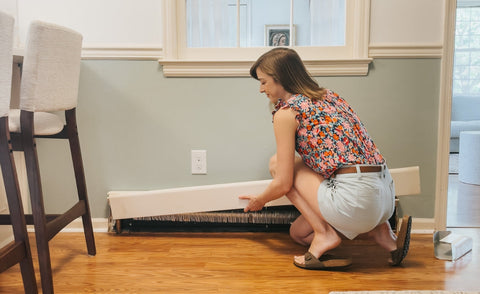
Dust and debris on baseboard heater fins block airflow, so your system has to work harder to heat the room. Most homeowners have never given their baseboard heaters a deep clean.
Whether you have hydronic baseboard heaters or electric baseboard heaters, regular cleaning helps them run better and look better. Below, we'll walk through how to clean baseboard heaters inside and out, plus the tools you'll need.
Plan on doing this once a year. The best time is before heating season starts, while the heat is still off. It's also a good time to check whether your baseboard heater covers are due for a refresh.
What's Actually Living in Your Baseboard Heater?
Baseboard heaters pull in cool air at floor level, warm it, and push it back into the room. Over months of use, they collect whatever is floating in that air.
Dust is the obvious culprit, but it's rarely just dust. You'll often find a mix of dead skin cells, pet dander, hair, carpet fibers, and pollen packed between the fins. In homes with dogs or cats, fur can build up enough to restrict airflow, so pet owners may want to clean two to three times a year.
Air quality matters too. When you turn the heat on in the fall, the heater can burn off debris that settled on the fins over the summer. That faint burning smell on the first cold day usually comes from this. For anyone with allergies or asthma, starting the season with a clean heater means cleaner air from day one.
The fix is simple and takes about 20 minutes per room.

How to Clean Baseboard Heaters in 5 Steps
A few minutes per heater gets you ready for winter, and doing it yourself costs less than hiring a cleaning service.
What You'll Need
- Vacuum cleaner with a brush attachment
- Soft cloths or microfiber towels
- Mild cleaning solution (water and mild detergent)
- Bucket of warm water
- Soft-bristle brush
- Needle-nose pliers or a fin comb
- Compressed air (optional)
- Screwdriver (if your covers are screwed in place)
- Gloves and dust mask (optional)

Before You Start: Turn Off the Heat and Let It Cool
Turn the thermostat off and let the heater cool completely. For electric baseboard heaters, also switch off power at the circuit breaker.
Step 1: Remove the Covers
Lift off or remove the end caps, then lift the front cover off the heater. Some covers are held on with screws, so keep a screwdriver handy.
Step 2: Vacuum the Fins
Use a vacuum with a brush attachment to remove dust on and between the fins. Vacuum the fins from all sides, along with the heater casing and the floor underneath. Compressed air also works for blowing dust out of tight spots.
Step 3: Use the Right Baseboard Heater Cleaning Tool
A soft-bristle brush loosens debris the vacuum misses. Work gently, since the fins bend easily. If you find bent fins, straighten them with needle-nose pliers or a fin comb to restore airflow.
Step 4: Wipe Down the Covers Inside and Out
A soft cloth with warm water and mild detergent is all you need for the covers and casing. Let everything dry completely before putting it back together.
Step 5: Replace the Covers and Repeat Annually
Reinstall the front panel and end caps. Set a reminder to clean again next year, or two to three times a year if you have pets.
How to Clean Electric Baseboard Heaters
You can clean electric baseboard heaters with the same basic steps and a few extra precautions. Turn off power at the breaker, keep water and moisture away from the heating element, and skip metal tools. A soft brush and a vacuum brush attachment work best.
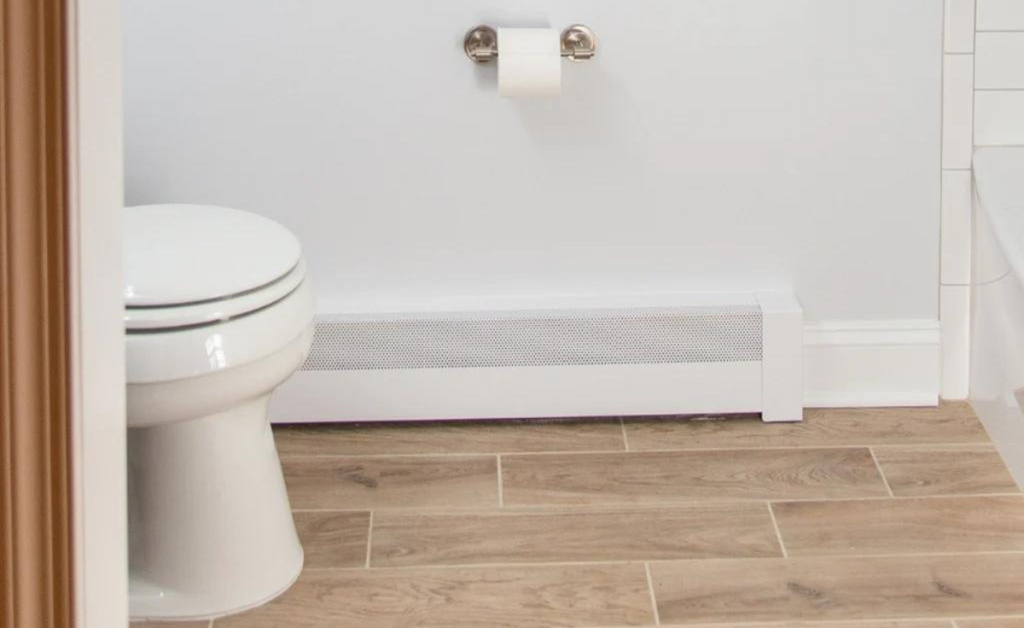
Preventative Maintenance
Want to keep dust out longer? A few small fixes help:
- Seal gaps around pipes. Gaps in the wall around your heating pipe can let dust in. Seal them with heat-resistant expanding foam.
- Close floor and trim gaps. Use expanding foam or tape to seal gaps between the floor and wall or along loose trim.
- Keep the room clean. Regular dusting and vacuuming means less debris for the heater to pull in.

Frequently Asked Questions
Do baseboard heaters need to be cleaned?
Yes. Dust and debris on the fins reduce airflow and efficiency, and they can cause a burning smell when the heat first comes on.
How often should I clean my baseboard heaters?
At least once a year, ideally before heating season while the system is off. Homes with pets may need cleaning two to three times a year.
What is the best way to clean baseboard heaters?
Turn off the heat, remove the covers, vacuum and gently brush the fins, wipe down the covers, and reinstall them once everything is dry.
How do you clean baseboard heater fins?
Vacuum the fins with a brush attachment, then use a soft-bristle brush for anything left behind. Work gently, since fins bend easily. Straighten any bent fins with needle-nose pliers or a fin comb.
How do I clean the inside of a baseboard heater?
Turn off the heat (and the breaker for electric units), remove the cover, then vacuum and brush the fins and casing. Wipe the cover with a damp cloth and let it dry before replacing it.
How do you make old baseboard heaters look new?
Start with a thorough cleaning. For rust or wear, you can sand and repaint with heat-resistant paint, but the easiest upgrade is replacing the covers.
How long do baseboard heaters last?
Well-maintained baseboard heaters often last 15 to 20 years. Replace the heater if it's damaged or no longer heats effectively. Covers can be swapped out anytime.
The Bottom Line
Your baseboard heater works hard all winter. Give it about 20 minutes once a year and it'll run cleaner and more efficiently for years to come.